
What Are Construction Deficiencies (and Why They Matter More Than You Think)

Construction deficiencies are common in both large-scale developments and residential properties. From drywall imperfections to poor caulking or finishing issues, these problems can delay inspections, impact quality, and increase costs if not addressed properly.
Construction deficiencies are part of almost every project. No matter how experienced the team is or how well a project is managed, small issues tend to appear as construction moves into its final stages.
In fast-paced markets like Vancouver, Burnaby, and the Lower Mainland, where timelines are tight and multiple trades are working simultaneously, deficiencies are not unusual. What matters is how they are handled.
For some teams, deficiencies become a last-minute scramble. For others, they’re managed early and systematically, allowing projects to move forward without unnecessary delays.
What Are Construction Deficiencies?
A construction deficiency is any element of a project that does not meet the expected standard at the time of inspection or handover.
Most deficiencies are not structural. They are typically related to finishing and presentation. The kinds of details that may seem minor individually but become critical when multiplied across multiple units or spaces.
– Common examples include:
– Uneven paint or visible touch-up marks
– Drywall imperfections or small cracks
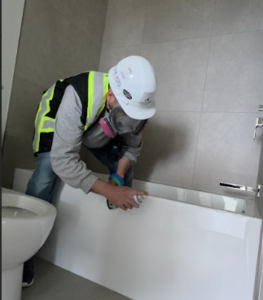
– Poorly applied caulking or missing seals
– Minor damage to cabinetry, trim, or fixtures
– Incomplete cleaning before inspection or occupancy
These are the details that determine whether a space feels complete.
Why Deficiencies Are So Common in the Lower Mainland
Construction in Greater Vancouver comes with its own set of challenges. High demand, tight deadlines, and layered coordination between trades all contribute to how finishing stages are executed.
– Deficiencies often happen because:
– Multiple trades overlap in the same space
– Finishing work is compressed toward the end of the schedule
– Small issues are missed during earlier walkthroughs
– Damage occurs after a trade has already completed their scope
Even in well-managed projects, these conditions make deficiencies almost inevitable.
The Impact on Projects and Homeowners
For construction teams, deficiencies are more than just a checklist. They directly affect timelines, inspections, and overall project flow.
When not managed properly, they can lead to:
– Delayed inspections and repeated walkthroughs
– Increased coordination between trades
– Additional labour costs and rework
– Slower project turnover
For homeowners and residential clients, the impact is more personal. It affects how the space feels when they move in.
– Common concerns include:
– Visible imperfections in new or renovated spaces
– Areas that feel unfinished or inconsistent
– Small issues that become more noticeable over time
In both cases, the issue is not just the deficiency itself. It’s how quickly and properly it gets resolved.
How to Fix Deficiencies the Right Way
The difference between a smooth project and a delayed one often comes down to process.
Instead of waiting until the end, the most effective approach is to address deficiencies progressively.
A structured method typically includes:
– Early identification during finishing stages
– Clear tracking of issues across units or spaces
– Coordinated scheduling aligned with the project timeline
– Consistent execution to ensure all units meet the same standard
This approach reduces pressure at the final stage and helps maintain momentum.
Construction Projects vs Residential Repairs
Although the nature of deficiencies is similar, the context changes depending on who you’re working with.
In construction projects:
– The focus is on efficiency and coordination
– Work must align with site schedules and multiple trades
– The goal is to prepare for inspection and turnover
In residential spaces:
– The focus shifts to comfort and presentation
– Work must be done with minimal disruption
– The goal is to make the space feel complete and consistent
Understanding this difference is key to delivering the right kind of service.
Final Thoughts
Deficiencies are not the problem. Poor handling of them is.
Projects that plan for deficiency work, coordinate it properly, and execute it consistently tend to move faster and deliver better results.
Whether you’re managing a construction project in Surrey or dealing with finishing issues in your home in Vancouver, the goal is the same: resolve issues early, efficiently, and with attention to detail.
When Your Contractor Doesn’t Show Up: Emergency Construction Support in Greater Vancouver
It happens more often than people expect. A contractor doesn’t show up,…

Deficiency Repairs in Vancouver: What Builders, Property Managers, and Homeowners Should Know
In a city like Vancouver, where construction is constant and demand is…

Repair vs Replace: What’s the Best Option for Damaged Surfaces?
Repair vs Replace: What’s the Best Option for Damaged Surfaces? Damage happens….
Common Post-Construction Issues Homeowners Face (and How to Fix Them)
Common Post-Construction Issues Homeowners Face (and How to Fix Them) Moving into…

How to Prepare a Construction Project for Turnover Without Delays
How to Prepare a Construction Project for Turnover Without Delays Turnover is…

What Are Construction Deficiencies and How to Fix Them in Vancouver Projects
What Are Construction Deficiencies (and Why They Matter More Than You Think)…